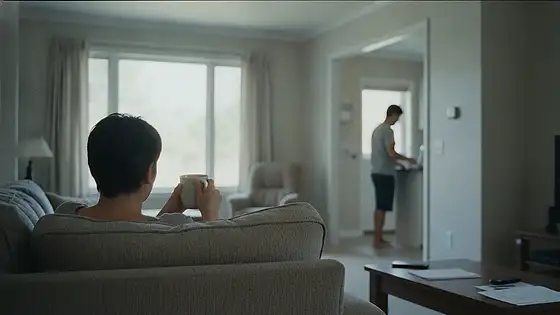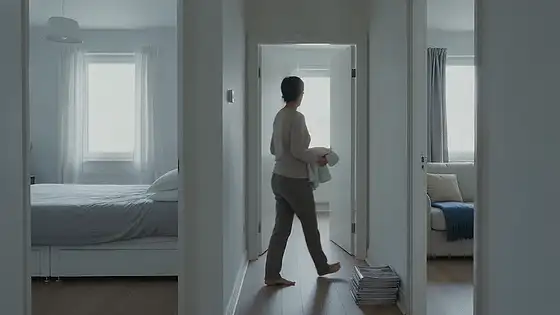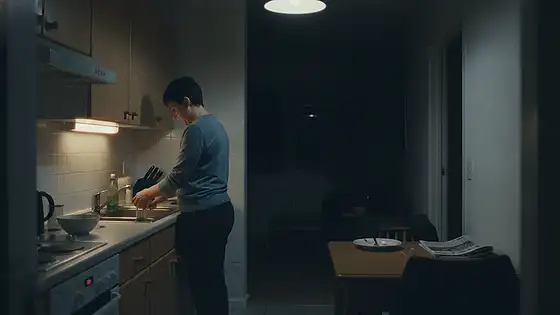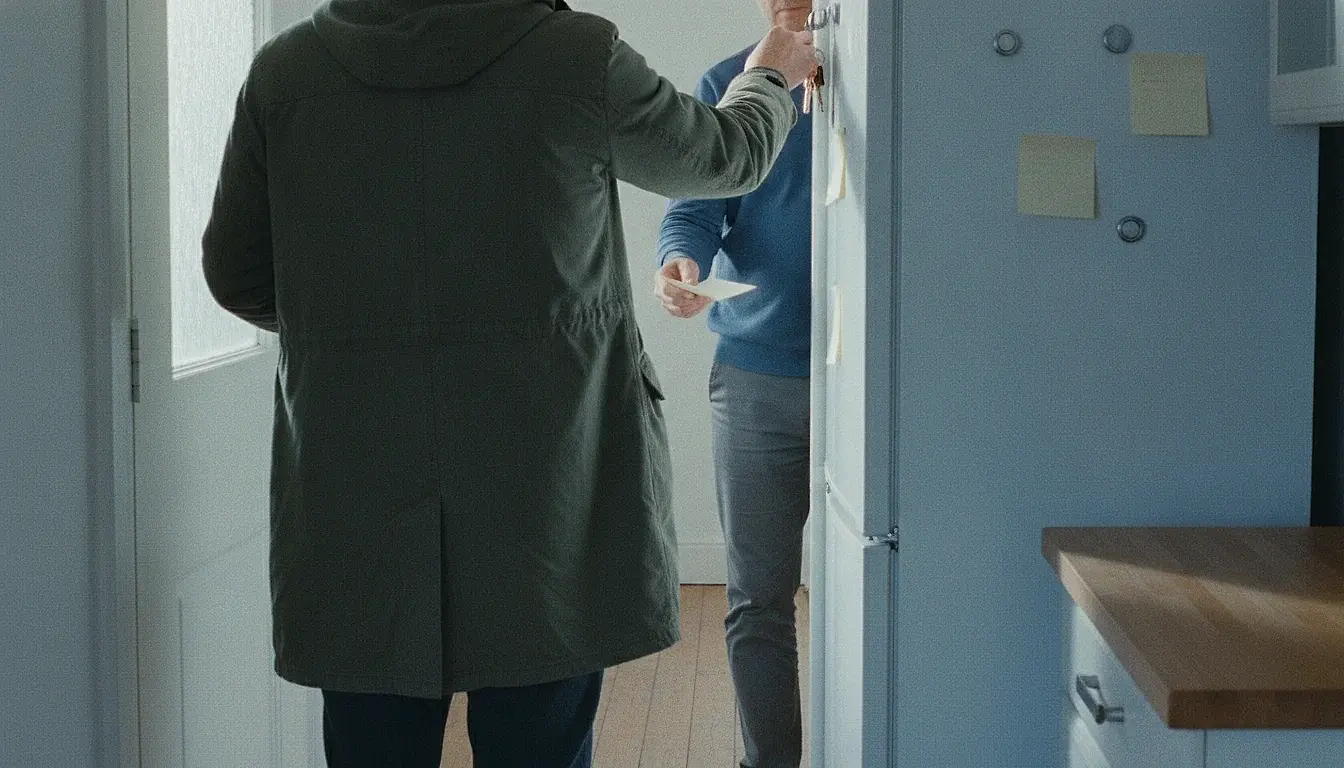
The evidence is boring: attention, effort, and what happens after a fight. People asking how to know if your spouse loves you expect the answer to be dramatic. It is duller than that. The question arrives on a plain Wednesday, after a week in which you exchanged handover notes about the car and nothing else.
Marital love, as something you can actually observe, is a pattern of attention, effort and repair that repeats across ordinary weeks. It is not a feeling you can read off your spouse’s face on a given evening, and it is not something a single gesture can prove or disprove.
This page is about what to look at, what those observations can and cannot tell you, and how to ask the question out loud without it turning into an argument. What it will not do is answer it for you: no page can see your spouse, and none is in a position to say what you do next.
How do you know if your spouse loves you?
Watch across weeks rather than days, and watch three unremarkable things: attention, effort and repair. Any of the three is cheap to perform once and expensive to keep performing, which is what makes a month of evidence worth more than the single evening sitting in front of you.
Attention is the plainest anchor, and the cheapest to check. Does your spouse ask you questions about things that have no logistics attached to them? Do they know what is currently hard at your work, what you are worried about, the name of the friend whose divorce you keep mentioning? Attention is the part of affection that shows up as curiosity, and curiosity is the thing that fades first when someone has stopped keeping an internal file on you.
Effort is the next anchor, and it is easiest to see in the things you never asked for. The chore handled before it was mentioned, the appointment moved so you would not be alone at it, the detour to the shop that sells the bread you like. Requested effort tells you your spouse is cooperative. Unrequested effort tells you they were thinking about you when you were not in the room.
Repair is the most telling anchor of them all. Arguments go badly sometimes. The question is what happens in the hours afterwards: whether someone crosses the room, makes the joke, refills your coffee, says a version of “that got out of hand.” A partner who has stopped caring has little reason to come back. Coming back is effortful, mildly humiliating, and pointless unless you want the relationship to continue.
Some scenes, to make this concrete:
- For example, a husband who says little all evening but who has noticed that his wife has been dreading a Monday meeting, and who asks about it on Monday night without being prompted. That is attention: the meeting was stored somewhere.
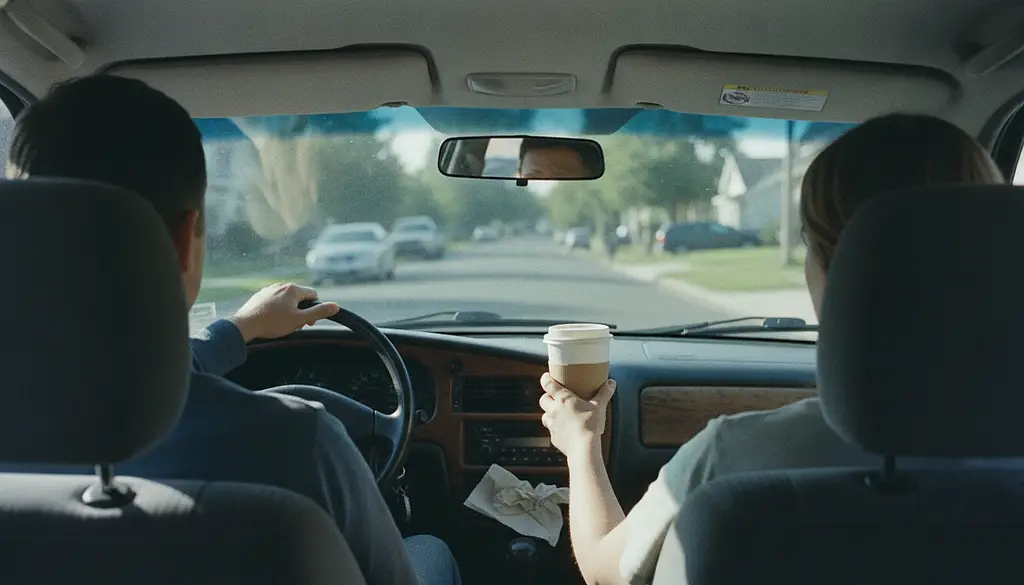
- For example, a wife who, after an argument on Saturday about her mother, does not apologise on Sunday but does bring coffee for both of them and sit down within arm’s reach. That is a return in a familiar form: non-verbal, slightly awkward, and unannounced.
- For example, a spouse who books the dentist appointment they have been reminded about repeatedly. That is compliance, not effort, and it belongs in a different column. Doing what you were asked is the floor of living together, not evidence of anything more.
That last scene matters as much as the others. In a busy household, competent cohabitation can look much like love, and competent cohabitation is worth having. But it does not answer the question you came here with, and it is the main thing people mistake for an answer.
Why do online “signs he loves you” checklists prove nothing?
Because they are built backwards. A checklist takes behaviours seen in affectionate couples and presents them as a test, when the same behaviours turn up in couples who are miserable and go missing in couples who are perfectly all right. A list can describe a type. It cannot tell you what is true in your house.
Some specific problems are worth naming, because the format is everywhere in search results and it leaves readers worse off than it found them.
One problem is that these lists have no denominator. “He texts you during the day” is a standard item. A devoted spouse may text nothing between breakfast and dinner because they work somewhere that does not allow phones, or because they have never been texters. The item scores them badly for a habit that has no bearing on the question.
Another is that the items are unfalsifiable either way. If your spouse is quiet, a list will tell you that quiet men show love through acts. If your spouse talks constantly, another list will tell you that verbal reassurance is the real thing. Any behaviour can be read as evidence for the conclusion you arrived with, which is why reading a stack of them leaves you exactly where you started, only tireder.
Then there is the audience problem. The format is borrowed from pages written for people at the beginning of a relationship, where the question is whether someone is interested. In a marriage, interest is settled and the question is different: whether the attention that was there has been withdrawn, or merely spent elsewhere for a season. Early-dating signals do not translate.
The serious version of this idea points the other way entirely. In The Seven Principles for Making Marriage Work, researcher John Gottman and Nan Silver describe couples who stay happy together in conspicuously domestic terms: knowing the small facts of each other’s lives, turning toward each other in unremarkable moments, treating what worries the other person as worth the time. Domestic, not romantic. That is the argument for watching the dull things instead of waiting on a grand one. We are unaffiliated with the authors and the publisher; our sources page lists the published work we refer to.
| What to watch | What it looks like on a normal week | What it does not prove |
|---|---|---|
| Attention | Questions with no logistics attached; knowing what is currently hard for you | That your spouse is happy, or that nothing needs discussing |
| Unrequested effort | Something handled before it was mentioned; a small detour taken for you | That effort will continue through a demanding season without being asked for |
| Repair after conflict | Coming back within hours: a joke, a touch, an admission it got out of hand | That the underlying argument has been resolved |
| Compliance | Doing what was asked, after being asked | Anything about affection either way |
What does it mean if the effort stopped?
On its own, it means the effort stopped. That is a real change and worth raising, but it is several steps away from a conclusion about how your spouse feels, because attention is what a hard season takes early and what people notice spending last.
Effort can disappear for reasons that have nothing to do with wanting you less. A new job with an unfamiliar manager. A parent who is ill. A baby, or a teenager. A stretch of poor sleep long enough to flatten anyone’s initiative. In those seasons, people run on defaults, and the default that remains is logistics: who is collecting whom, what is for dinner, has the form been signed.
Another possibility deserves saying plainly, because leaving it out makes this page dishonest: sometimes effort stops because someone has quietly given up on being able to reach you, and is waiting to see whether you notice. That version looks identical from the outside to the busy season and to the unnoticed effort. It cannot be told apart by observation, which is the strongest argument on this page for asking rather than watching.
It also disappears when it has gone unnoticed for long enough. Effort that is never remarked on becomes invisible to both people, and the person making it quietly stops. That version is worth catching, because it is reversible and both of you contributed to it.
The distinction that actually helps is between effort that has paused and effort that has been redirected. Paused effort comes back when the season ends, without needing a conversation about it. Redirected effort is when the energy is visibly going somewhere else and has been for a long time, and it is the sort of thing that deserves a direct question rather than a period of watching. If the quiet has lasted a long stretch and the loneliness has become the normal weather of the house, feeling lonely in a marriage covers that ground, and how to fall back in love with your spouse covers the version where the feeling itself has gone flat on your side.
One letter a week about the ordinary parts of marriage
That did not go through. Nothing was saved and nothing was sent. Try the address again, or write to us directly and we will add you by hand.
- What arrives
- One question worth asking your spouse this week, and the shortest honest account of when it works.
- What does not
- No rules with numbers in them, no promises about outcomes, and no third party ever gets the address.
How do you ask directly without starting a fight?
Ask about a described moment rather than about the state of your spouse’s feelings, and ask when neither of you is already annoyed. “Do you still love me?” is a question that can only be answered with reassurance, which is why it settles so little. A question about a specific week gets you information you can use.
Some ways to open it, in rising order of directness:
Start with what you have noticed, stated as behaviour rather than as a verdict. “We have not had a conversation that wasn’t about the schedule since your project started, and I have been missing it.” Nothing there needs defending, so there is nothing to defend.
Ask for the thing you want rather than for an assessment of the marriage. “Could we have some time after dinner where the phones are in the other room?” This is a request a person can grant this week, and their answer to it tells you more than a discussion about feelings will.
If you want the direct question, ask it with the reason attached. “I want to ask you something plainly, and it is not an accusation: I have been unsure lately whether you still want this, and I would rather ask than guess.” The stated reason keeps it from landing as a challenge, and a question asked that way is easier to answer than one that arrives as a demand.
What to expect afterwards: expect an awkward answer in the moment rather than a satisfying one, and a better one later, once the other person has had time to think. Judge the exchange by what follows it, not by how uncomfortable it was while it happened. If nothing shifts and you want a structured way back into contact, how to reconnect with your spouse is the practical version of that, and the rest of the guide’s coverage of drifting sits on our main guide.
If any of this touches your safety, or if it has gone on long enough to be affecting your health, that is the point where the page hands over to a qualified professional. Our sources page is where we keep the published work we cite; it is not a referral list, and we do not take payment for recommendations.
What this page does not do
A page about doubt is easy to write badly. Here is what we are deliberately not doing.
- We do not answer the question for you
- Nothing written at this distance can report what your spouse feels or what comes next. Better things to watch, and a better question to say out loud — that is the entire offer, and it is deliberately smaller than the title of the page.
- We do not turn you into an investigator
- No phone checks, no timelines, no reading messages. Surveillance answers a different question than the one you have, and it damages the thing you are trying to find out about.
- We do not sell a personality test as evidence
- Quizzes about how people prefer to give and receive affection can make for a useful conversation. They are not a measurement of whether you are loved, and they are not used that way here.
- We do not label your spouse
- Behaviour can be described; people cannot be summarised in a word. A page that hands you a label for the person you live with has made your week worse, not clearer.
What we do stand behind
- Watch patterns, not evenings
- A flat night proves nothing. A pattern across weeks is information, and it is the only unit worth acting on.
- Ask rather than infer
- A described, specific question gets a usable answer where a period of watching does not.
The honest summary is that there is no test. There is a set of things worth watching, a set of things not worth watching, and a direct question that people put off for far longer than they need to. Checked: 2026-09.