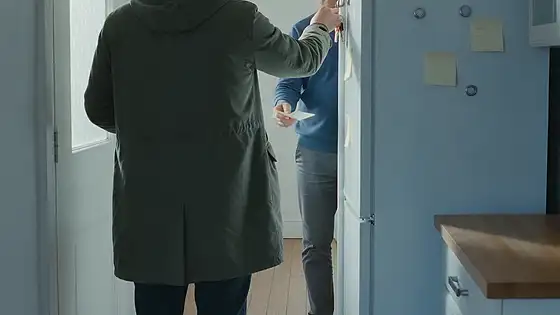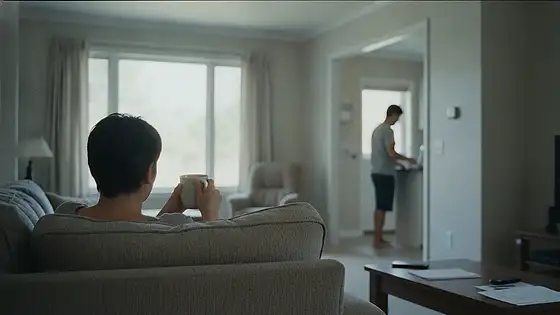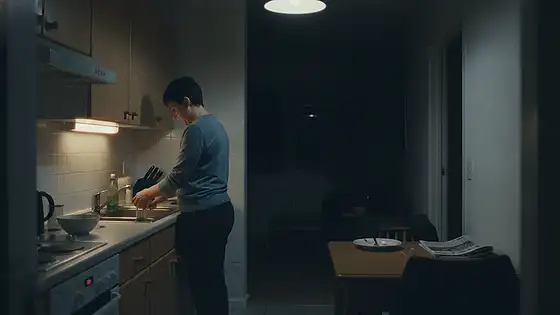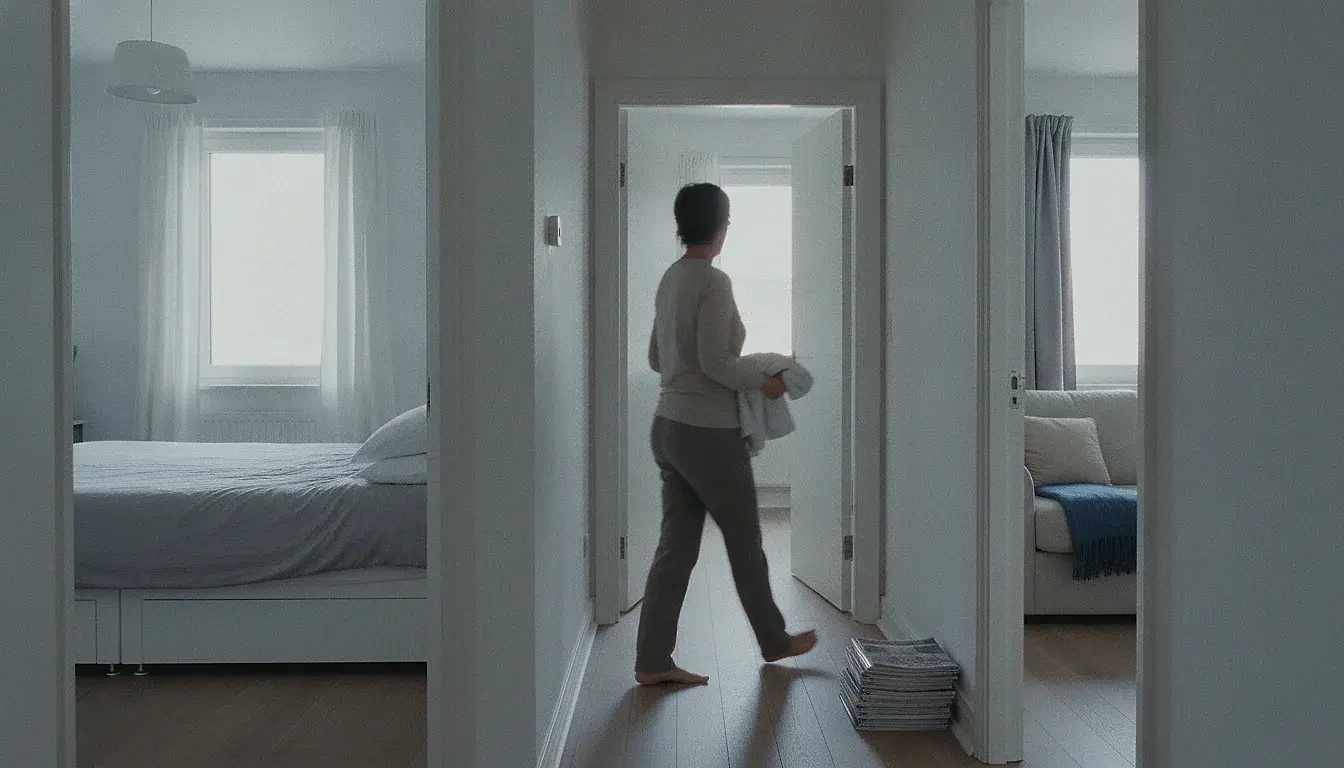
Separate bedrooms are a sleeping arrangement in which married partners rest in different rooms — a decision that can be made for an entirely practical reason, with no change in how the two of them feel about each other. The phrase people search, sexless marriage separate bedrooms, folds two different things into a single worry: where you sleep, and whether closeness has gone quiet. They overlap enough to be confused. They are not the same thing.
Four things get covered below: why the move happens, what separates a practical arrangement from a signal, how to open the subject without it landing as an accusation, and where a website has to hand over. What is not covered: a normal to measure yourselves against, or any verdict on your own marriage — a page cannot see it. Checked: 2026-09.
Why do married couples sleep in separate bedrooms?
The reasons couples give for moving into separate rooms have nothing to do with how they feel about each other: snoring, opposite shifts, a baby waking in the night, a partner who reads until late, chronic pain, a mattress argument that never resolved. The decision falls to whoever is losing sleep, and it arrives without ceremony.
That casualness is the point. Nobody sits down and negotiates a change to their marriage; someone takes a pillow to the spare room on a bad Tuesday, sleeps properly for the first time in a long stretch, and does it again the next night. Before long it is where the pillow lives. The arrangement gets made by accumulation rather than by decision, which is why a couple can find they cannot say when it started.
- For example, one partner starts a job with a pre-dawn alarm, moves out of the room to stop waking the other, and the room stays that way long after the job changes.
- For example, a newborn ends up in one bedroom with one parent, the other parent takes the spare room to keep at least one adult functional, and the layout survives long past the newborn stage because nobody wants to be the one who suggests moving back.
- For example, one of you sleeps badly next to another warm, moving human, and after a long stretch of trying to be a good sport about it, admits that the spare room is where sleep actually happens.
There is also the version nobody plans: the room that was chosen once and then defended, quietly, by both people. One of you sleeps better and does not want to say so. The other has got used to the whole bed and does not want to say that either. Neither confession seems worth the awkwardness of the conversation, so the arrangement holds on two unspoken preferences that would have been perfectly fine said out loud.
Other people’s reactions add a layer that has nothing to do with either of you. Parents ask questions; friends make a joke and then look at you a beat too long; a comment thread treats the arrangement as the beginning of the end. That commentary is worth ignoring, and it is also worth noticing how much of the shame around this comes from outside the house rather than from inside it.
None of that is drift. Rest is a real need, and it is easier to be kind on a night of sleep than on a night of lying still out of principle. The arrangement earns its reputation only when it starts doing a second job nobody named.
When is it practical, and when is it a signal?
It is practical when both people can say why it exists and either could raise moving back without it becoming a scene. It is a signal when the reason has quietly expired, nobody has replaced it, and the room has become a way of avoiding something rather than a way of getting sleep. The difference is not the layout of your house. It is whether the arrangement is still being discussed.
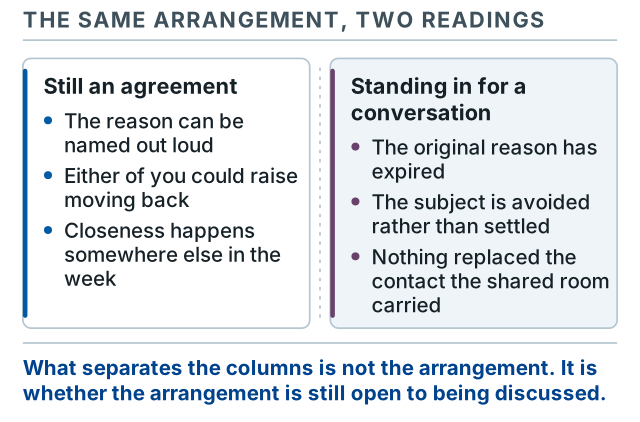
The shared bed carries small contact that nobody counts: the last sentences of the day, a hand on a back, the fact that you both hear the same thing in the middle of the night. When the room goes, that contact goes with it unless something else takes it on. The couples who move rooms and stay close are the ones who put that contact somewhere deliberate — a walk after dinner, the last half hour on one sofa before somebody goes up, a Sunday breakfast that nobody schedules around.
Couples who drift are not simply the ones who moved rooms. They are the ones who moved rooms and replaced nothing. That is worth saying plainly, because the search results on this subject tend to treat the furniture as the verdict, and it is not.
Other markers are worth watching, offered as markers and nothing more. One is relief: if closing the door feels like getting away with something, that is information about the marriage rather than about your sleep. Another is silence about the silence — the point at which neither of you mentions the arrangement to the other, to friends, or to yourselves.
How do you raise the subject without it becoming an accusation?
Raise the arrangement, not the marriage. “Are we still doing this because of your shifts, or is it something else now?” is answerable in an evening. “We do not even sleep together any more” is a verdict about how far things have gone, and verdicts get defended rather than answered. The smaller sentence gets you further, because it is the one your spouse can say yes to without conceding anything about who they are.
Timing does as much work as wording here, and this subject punishes bad timing badly. Late at night, in either bedroom, at the moment of separating for the night, is the worst available moment: one of you is tired, the other feels caught, and the room itself makes the question feel like a complaint. A weekend morning, a car, a walk — anywhere that is not the doorway — gives the same sentence a different reception.
- For instance, instead of “you obviously do not want to be near me”, try “I have missed the end-of-day talking we used to do. Could we sit down for a while before you go up?”
- For instance, instead of “when are we going to be normal again”, try “the shift pattern is over now. Do you want to try the same room again for a stretch and see how we both sleep?”
- Consider how the sentence you rehearsed at three in the morning would sound read out at breakfast. Accuracy is not the property that decides how it lands, and the sharpest available version starts a different argument from the one you came to have.
Frame anything you try as a trial rather than a return. A stretch in the same room, a standing slot before bed, an occasional night — a trial can be reported on honestly, and either of you can end it without it meaning something about the marriage. A permanent decision, taken on a Sunday evening when one of you is anxious and the other is agreeing in order to end the conversation, holds for a fortnight and then curdles.
Expect a first answer that is not much of an answer. The reply may be “I do not know”, and that can be true rather than evasive. What matters is whether the subject is allowed to come back later without a scene. The general mechanics of opening a hard subject — the opening, the pause, the return — are on our page about how to communicate better with your spouse.
One honest letter, once a week
That did not go through. Nothing was saved and nothing was sent. Try the address again, or write to us directly and we will add you by hand.
- What arrives
- One question worth asking your spouse this week, and the shortest honest account of when it works.
- What does not
- No rules with numbers in them, no promises about outcomes, and no third party ever gets the address.
What if intimacy has stopped altogether?
Then treat it as a subject with several possible causes rather than a diagnosis with one. Sleep debt, health, medication, a demanding stretch of parenting, resentment that never got said, opposite schedules, and a long habit of avoiding the topic can all produce the same quiet. We will not tell you what is normal, name a frequency, or guess which of those applies to you, because a page cannot see your marriage and would only be flattering you or frightening you.
What can be said is that the conversation comes back before the intimacy does, and in that order. The accounts couples give of a way back are not accounts of a dramatic night; they describe ordinary contact returning first — talking properly, touching without it being a proposal, being pleased to see each other in the kitchen. That is also the argument of The Seven Principles for Making Marriage Work, by researcher John Gottman and Nan Silver, which sets everyday friendship underneath romance instead of treating passion as a separate skill. We have no connection to its authors or its publisher; the argument is summarised on our page about the seven principles for making marriage work, and everything we cite is listed on our sources page.
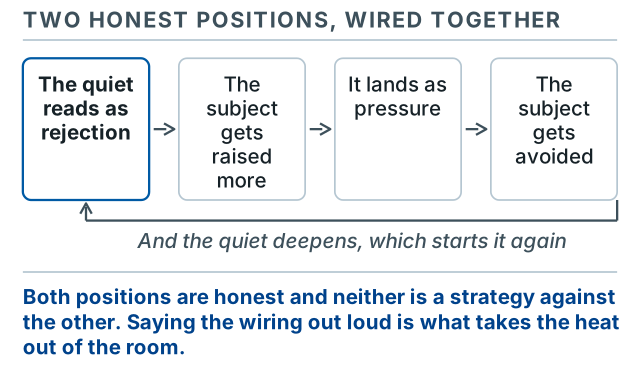
One asymmetry is worth naming, because it is the reason these conversations go badly. The quiet lands on one side as rejection, and the subject itself lands on the other side as pressure. Both of those are real, both are uncomfortable, and each one feeds the other: whoever feels rejected raises it again, which raises the pressure, and whoever feels pressured withdraws a little further, which deepens the rejection. Naming that wiring out loud, as something the two of you are inside rather than a fault belonging to whoever wants less, is the move that lowers the temperature.
It also helps to separate two questions that get asked as one. Whether you are having less sex than you want is a question about you and your spouse. Whether that has become unsayable between you is a question about the marriage, and it is the one that decides how things go from here. Pressure does not move the first question. Making the subject speakable can move both.
The limit of what a page like this can hold. Physical pain, a sustained change in health or desire, a medication that altered things — those are a question for a doctor rather than for an article, and the doctor should come before the marriage conversation. A quiet that has held for a long stretch without moving, or a subject that cannot be raised at all without the evening ending badly, is work for a qualified professional. And where anyone’s safety is involved we do not write about it here at all; the routes are on our sources page.
Seeing someone is not a verdict on the marriage either. A short course of sessions is an outside pair of eyes on one subject that has been circling for a long time, and afterwards you get on with the rest of it.
If what you recognise here is less about the bedroom and more about being unaccompanied in general, that has its own page: feeling lonely in a marriage. If you want the groundwork — the small, repeatable arrangements that put contact back in an ordinary week — start with how to reconnect with your spouse. The wider view of what makes a marriage workable in ordinary conditions sits on our marriage advice pillar.
What this page does not do
Sleeping arrangements and intimacy are exactly the subjects where confident writing does the most damage. These limits are deliberate.
- Tell you what is normal
- We do not publish a frequency, a duration, or a share of couples who sleep apart. Those numbers circulate widely and do not survive a check. A normal you did not ask for is either a relief you have not earned or a worry you did not need.
- Read your marriage from your furniture
- Separate rooms are compatible with a close marriage and with a distant one. Which yours is cannot be settled from a description of where the pillows are, and we will not pretend otherwise.
- Explain why anyone wants less
- No account of your spouse's desire, health or motives appears on this page, because we have none to give. A sustained change in health or desire is a question for a doctor; a subject that has become unsayable between two people is work for a qualified professional.
- Promise the closeness comes back
- Nothing here restores intimacy on a schedule, and no page is written well enough to. The narrower claim we will make is that a trial the two of you can report on honestly tells you something within a fortnight, where an open-ended discussion about closeness can run for a year and settle nothing.
What it does stand behind
- The arrangement is not the problem; the silence around it is
- A sleeping arrangement both people can name and either could reopen behaves very differently from one that has quietly become permanent.
- Contact has to be relocated, not just removed
- The shared room carries small daily contact. Couples who move rooms and stay close put that contact somewhere else on purpose.
- Trials beat verdicts
- A stretch in the same room can be reported on honestly and ended without meaning anything. A permanent decision taken in order to end an uncomfortable conversation does not hold long.