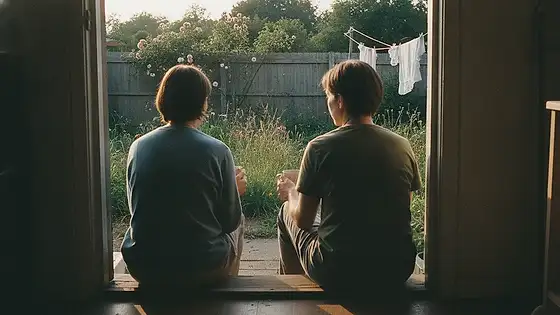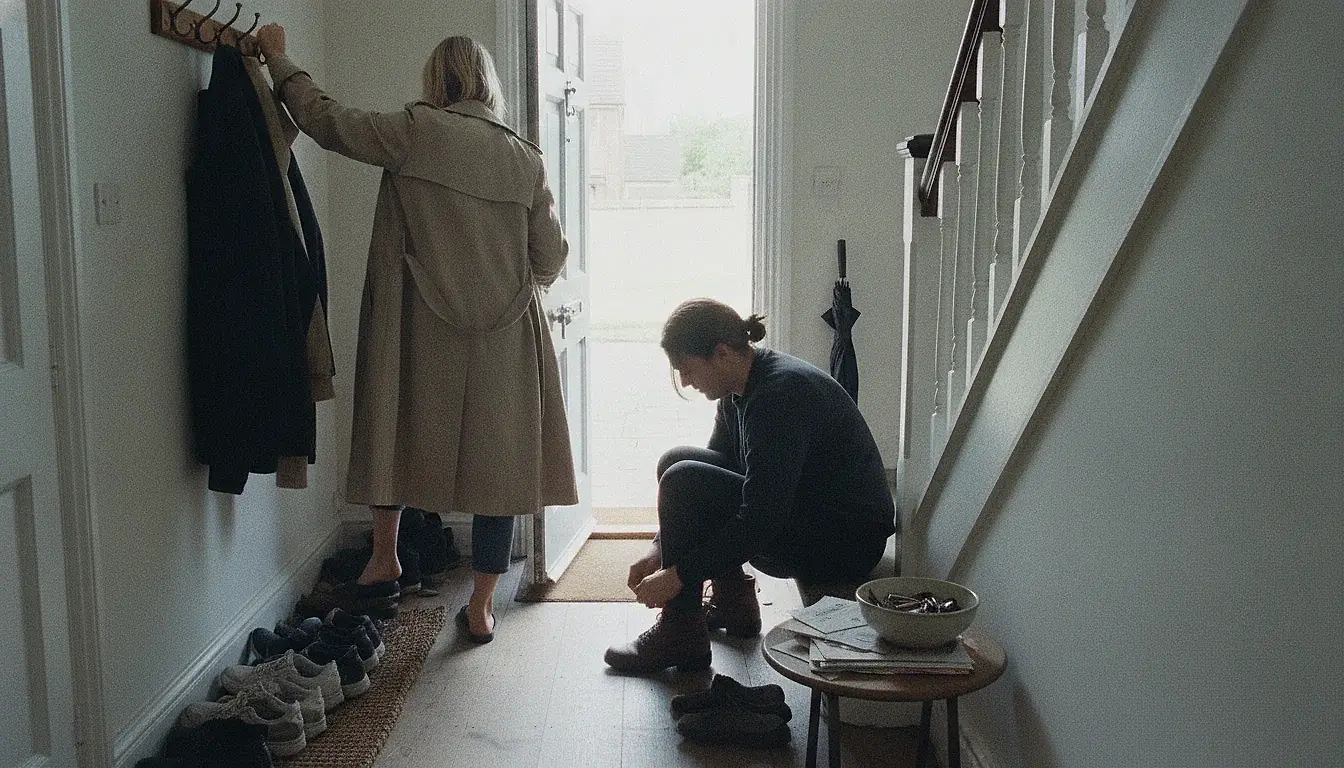
A date night is a block of time a married couple spends on each other’s company rather than on the household — booked in advance, protected from admin, and short enough that both people can still be awake at the end of it. That definition is deliberately modest. It does not require a restaurant, a babysitter or a good mood, and it does not have to produce a meaningful evening to have been worth doing. The date night ideas for married couples below assume that version of the evening rather than the cinematic one.
Lists like this are written for a couple with a free Saturday and an appetite for effort. A couple reading one at half past nine on a Tuesday may have neither, which is why the ideas here are grouped the way they are rather than by theme or by how impressive they sound. Read the table and the sections as three shelves, and take something off whichever shelf you can reach tonight. What to say once you are sitting down is a separate problem, covered on date night questions for married couples; the wider set of practical pieces sits on the marriage advice guide.
What makes a date night work when you are both tired?
A date night works when it costs almost nothing to start, has an obvious end, and carries no agenda beyond company. Tiredness does not kill the evening; setup does. Every step between deciding and starting — booking, driving, changing clothes, arranging cover — is a place where a tired couple quietly gives up and puts something on the television instead.
That gives a short test for any idea on any list. Can it start almost immediately after you decide? Does it end at a time you both already know? And can it be done without either of you performing enthusiasm you do not have? An idea that fails the first test is a plan for a different week, not a plan for tonight.
The second thing that makes it work is a rule about subject matter. A date night that turns into a household meeting was not a date night. Money, calendars, the car, the school forms and whose mother is visiting are all legitimate topics with no place in this particular hour, mostly because they are the topics that already fill every other hour. The money conversation deserves its own slot, and it goes better when it has one — that is the argument on budgeting for couples.
- For example, a couple who decide over the washing-up that they will eat at the table with the phones in another room have a date night that has already started. A couple who decide instead to find a restaurant for Saturday have a plan that has not started yet, and might not.
- For instance, an hour of cooking a dish together — one chopping, one at the stove, both drinking something — takes no booking, has a natural end when the plates are empty, and works on a night when neither of you could have faced a bar.
Third: lower the bar for what counts. Wait for the version with a restaurant, a sitter and a free weekend, and the gap between dates gets long enough that each one has to carry the weight of being The Evening. Count the walk around the block, and the evenings pile up instead — which does more than the quality of any single night.
| What you have left tonight | Nothing to spend | A small budget | Worth planning ahead |
|---|---|---|---|
| Almost nothing | Eat at the table, phones in another room, kitchen closed after | Order the food neither of you cooks well | Nothing — do not book anything for a night like this |
| A decent hour | Walk a route you like and take the long way back | Coffee or a drink somewhere you can hear each other | An hour at a place with a fixed closing time |
| A whole evening | Cook a slow dish together, play something competitive after | Dinner out, no admin talk, dessert somewhere else | A gig, a match, a cinema, a class you both said you would try |
| A rare free day | A long walk somewhere neither of you has been | A day trip to the next town with no itinerary | A night away while someone else has the house |
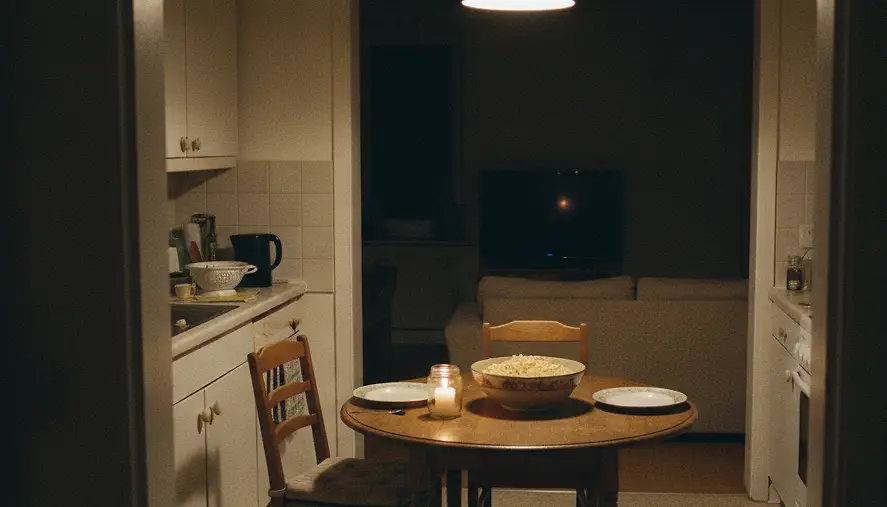
What can you do at home in an hour?
At-home date night ideas for married couples have to survive the house itself: the laundry in view, the kitchen that needs doing, and the sofa that ends every evening the same way. What makes an hour at home count is a boundary around it — a start, a finish, and a small change to the room so the evening is not identical to last night’s.
The changes that do the work are unglamorous. Eat at the table rather than in front of a screen. Put the phones somewhere that is not the room. Decide the kitchen gets dealt with tomorrow, and mean it. None of that is an activity, but all of it is what turns an ordinary hour into one that registers.
Ideas that fit an hour at home:
- Cook a dish together rather than one person feeding the other. Something with steps — it is the standing next to each other that matters, not the recipe.
- Eat somewhere other than the usual spot: the table if you always use the sofa, the balcony or the garden in decent weather, the floor with a blanket if the children are asleep upstairs.
- Play something short and competitive. Cards, darts, a quiz, a board game with a timer. Competition produces conversation that no amount of “so how was your week” can.
- Watch something you chose together and talk about it afterwards, rather than each scrolling in parallel with something on in the background.
- The tasting version: small things from the good shop — cheese, chocolate, beer, olives — arranged on a board and argued about.
- Photographs. Open the album from a year neither of you has looked at recently and go through it out loud. It produces stories you have not told each other for a while.
- Do the walk anyway. Around the block after dinner, in the dark, in the cold. It counts.
What the boundary is worth is easier to see side by side:
- Consider the difference between the same evening with and without a boundary: the couple who eat in front of the television and drift to bed separately have had a Tuesday; the couple who eat the same meal at the table, leave the plates, and sit on there talking have had a date. The food was identical.
An at-home evening also has one advantage that no restaurant offers: you can end it early without wasting anything. If one of you is finished before the evening is properly over, nothing has been booked, paid for or driven to. That makes the at-home version the right default on a bad week and the reason it deserves to be the version you do most often.
Date night ideas that fit a working week
That did not go through. Nothing was saved and nothing was sent. Try the address again, or write to us directly and we will add you by hand.
- What arrives
- One question worth asking your spouse this week, and the shortest honest account of when it works.
- What does not
- No rules with numbers in them, no promises about outcomes, and no third party ever gets the address.
What is worth leaving the house for?
Leave the house for the things a house cannot supply: someone else cooking, someone else cleaning up, a room neither of you is responsible for, and a reason to be in each other’s company with nothing to tidy in the corner of your eye. That is the whole case for going out, and it is a good one, which is why it is worth the setup cost sometimes.
Novelty is the second reason. A place you have never been makes ordinary conversation easier because there is something to react to, and reacting to things together is what an evening out actually consists of. It does not have to be expensive or clever. The next neighbourhood over counts as new if you never go there.
Ideas that justify the effort of leaving:
- Dinner somewhere you have not been, chosen by whoever is less fussy, booked early enough that it does not become a search on the night.
- Something with a start time you cannot control — a gig, a match, a screening, a comedy night. A fixed start solves the drifting problem better than any amount of intention.
- A class you have both mentioned: pottery, dancing, cooking, climbing. The awkwardness of being beginners together is the point.
- The bar-then-walk combination. A drink somewhere you can hear each other, then walking home the long way. Cheaper than dinner, and the walk does more for the talking than the table.
- A market, a car boot sale, a gallery on a wet Sunday — daytime dates count, and they are far easier to staff if you need cover for children.
- A night away without an itinerary, when it is available. Somewhere unremarkable and near is fine; the point is waking up somewhere that is not the house.
Childcare is the part lists skip, and it is the actual obstacle far more than the supply of ideas is. Treating cover as a standing arrangement — a swap with another family, a fixed night with a grandparent, the same sitter booked for a run of dates rather than one at a time — does more for the number of evenings you get than any list, because it removes the step that fails. Daytime helps too: an early lunch while the children are at school asks nothing of anybody.
Cost sets a limit that honesty handles better than ambition. If dinner out means a week of quiet resentment about the bill, the evening has been paid for twice, and the second payment lands on the marriage. Agree what a date night is allowed to cost when neither of you is hungry or annoyed, and then spend it without a discussion each time. The gentler, cheaper end of the same territory is on how to romance your spouse.
How do you make date night survive contact with the calendar?
Put it in the calendar as a repeating slot and give one person the job of protecting it. Date nights die of good reasons — work, tiredness, a sick child, a friend’s birthday — and a repeating slot survives those because it does not need to be reinvented each time. What is scheduled gets defended; what is intended gets postponed.
The second habit that keeps it alive is downgrading instead of cancelling. When the plan is too much for the night you actually have, drop a level rather than write the whole thing off: dinner out becomes food ordered in, ordered-in becomes toast at the table with phones elsewhere. The streak matters more than the standard, because a streak survives a bad month and a standard does not.
- For example, a couple with Wednesday nights blocked out arrive at a Wednesday where one of them has been awake since before dawn. Cancelling pushes the next date a long way out. Downgrading — tea, the sofa, a stretch of talking with nothing on — keeps Wednesday meaning what it means.
There is a family of naming conventions floating around this subject, and the best known of them is the 2-2-2 rule, a shorthand for a repeating rhythm of a date, a night away and a longer trip. It is worth knowing what people mean by it, and worth being clear about what it is — a memory aid somebody invented, not a measured recommendation. Nothing establishes that spacing as better than any other, and a couple who cannot manage the night away have not failed a test. The same goes for the 3-3-3 version, which does not even have a settled definition. Use the shape if it helps you remember; ignore the arithmetic.
Practical details that decide whether the slot survives the year: agree who books, so the job does not silently belong to one person forever; keep a short list of childcare options rather than starting the search each time; and pick the night by energy rather than by tradition — Friday is not automatically the right night, and a Sunday afternoon can beat it easily.
What do you talk about once you are there?
Whatever you like, as long as neither of you has to manage anything while you say it. That is a rule about the mode rather than the topic: an evening spent settling things is administration with better lighting, however good the food is. The way a date night fails is not silence but drift into the calendar, the money, the car and the in-laws, which will take the hour if allowed to and leave nothing of the evening behind.
The questions themselves are a separate tool, and we keep them on a separate page on purpose. Openers, follow-ups and the versions that work at a table, in a car or on a walk are collected on date night questions for married couples. This page is for deciding what to do tonight; that one is for what to say once the deciding is finished and you are both sitting there.
What the hour is actually for is keeping your picture of each other current. In The Seven Principles for Making Marriage Work, Gottman and Silver argue that the everyday friendship between spouses — knowing what the other person is dealing with, what they like, what they are worried about this month — carries at least as much weight as any conflict technique. We are readers of that book rather than associates of its authors. A date night is one of the cheapest ways to stop that knowledge going out of date, which is a plainer reason to defend the slot than romance is.
One person wanting the evening more than the other is an ordinary asymmetry, and it is worth naming without turning it into an accusation. The person who does the organising can read the other’s tiredness as indifference, while the tired one reads the plan as one more thing to perform well. Saying plainly that you want the time, and asking which version of it they could face this week, produces a smaller evening that actually happens.
Two mechanics make the hour easier to finish. Let anything heavy stop when the evening stops: a subject that clearly wants a proper conversation can be parked and given a night of its own rather than closed out in a car park. And judge the evening by whether it happened rather than by how it went, since the streak is the part that survives a bad month. The sources behind the qualitative claims on this page are listed on our sources page. Checked: 2026-09.
What this page does not do
A list of ideas is a small object, and this category oversells them constantly. These are the limits we hold to.
- It does not recommend venues, apps or boxes
- No restaurant picks, no subscription date boxes, no affiliate links dressed as ideas. We have no way to know what is near you, and a paid recommendation would be worth exactly what it costs us to make.
- It does not do the suggestive list
- Other pages answer this search with material written to be read rather than used. This one stays on what two tired adults can actually do on a Wednesday.
- It does not promise the evening will go well
- A date can be flat. That is normal and it is not a verdict on the marriage. The claim here is about frequency and setup, not about how any single night turns out.
- It does not carry a religious frame
- A religious frame is common in what ranks for this search. This page is secular by choice: no scripture, no vows-as-sermon, nothing addressed to the reader as a congregation.
What it does stand behind
- Sorting by energy, not by imagination
- The strongest practical claim on the page: what happens tonight is decided by setup cost and how tired you are, so an idea that cannot start almost immediately is a plan for a different week.
- Downgrade rather than cancel
- Dropping a level keeps the slot alive through a bad month. A standing Wednesday that sometimes shrinks to tea and a stretch of talking beats a perfect evening that hardly ever happens.
- The no-admin rule
- Money, calendars and logistics have their own time. Keeping them out of this particular hour is the single cheapest thing a couple can do to make a date night feel unlike the rest of the week.