Romance in a long marriage is deliberate attention aimed at one specific person, repeated often enough to be expected. That is a plainer definition than the word usually gets, and it is the one that survives a working week. The familiar advice on how to romance your spouse describes an occasion — a weekend away, a surprise, a restaurant with a wine list. Occasions are pleasant. They are also rare, expensive and easy to postpone, which makes them a poor foundation for something you want running all year.
The alternative is not lower effort spread thinner. It is effort on a shorter cycle, where the question stops being what would impress and becomes what would land with this particular person in this particular week. That is a smaller idea than the genre tends to offer, and it is the whole argument here. This page is secular and concrete, and it belongs to the closeness section of our marriage advice guide alongside how to reconnect with your spouse.
What counts as romance in a long marriage?
Romance in a long marriage counts as anything that makes your spouse the intended recipient of your attention rather than a person who happens to be in the room. The test is not cost or originality; it is aim. Something done for them, chosen with their preferences in mind, and delivered often enough that its absence would be noticeable, is doing the work that a grand gesture is supposed to do.
That definition rules some popular things out. A gift chosen because it is a standard gift is not aimed at anyone. An evening out that one of you endures and the other enjoys is aimed badly. An annual gesture made to settle an account is aimed at the calendar. None of these are wrong, exactly; they are just not carrying the weight people expect them to carry.
People asking how to be intimate with your spouse, or looking up ways to be intimate with your spouse, are asking about this rather than about the bedroom: being known by someone who is paying attention. Closeness of that kind is built from information — what the other person is worried about this month, what they have stopped mentioning because nobody asked twice, what they would do with a free morning. It accumulates in small exchanges and it decays quietly when the only subject left is the calendar.
It also rules in a great deal that does not look romantic from outside. The person who knows which day of your week is the bad one and adjusts the evening accordingly is doing something specific and personal. So is the person who remembers a small thing you mentioned in passing and brings it up later.
- For example, one partner notices the other has a run of difficult meetings on Thursday, so on Wednesday night they say: leave Thursday dinner to me, and take the long way home. That is aimed, cheap, and unmistakably about a particular person’s week.
- For example, someone mentions in October that they miss a walk they used to take before the children arrived. In November their spouse says: the weather is good on Sunday, I have asked your sister about the kids, we are doing that walk. The gesture is the memory, not the walk.
- For example, one of them has been trying to get to a class on Tuesdays and keeps losing the evening to the school run. Their spouse takes the school run for a term without making it a favour to be repaid. Nothing about it looks like romance. It is aimed exactly at what one person wanted and could not reach.
The Seven Principles for Making Marriage Work, by John Gottman and Nan Silver, argues something adjacent at length: the ordinary business of knowing each other’s lives carries more weight in a marriage than the performance of the occasional big moment. We cite it as outsiders, as a qualitative claim rather than a measurement, and it lines up with what people describe when asked what they remember.
What can you do this week that costs almost nothing?
The cheapest reliable moves are the ones that redirect attention you were spending anyway. You already have evenings, a phone, a kitchen and a commute. Romance on a working week is mostly a matter of pointing one of those at your spouse on purpose, rather than finding an extra evening that does not exist.
Things that fit inside an ordinary week:
- Ask a question that expects a real answer. Not “how was your day”, which has a short reply built in, but “what was the worst part of Tuesday” or “what are you looking forward to this month”.
- Take one thing off their list without being asked. The bin, the form, the phone call they have been avoiding. Say that you did it, once, and then leave it alone.
- Put the phones somewhere else for an evening. Not the whole week. An evening, in a drawer, with the television off.
- Cook or order what they like rather than what you like. Small, obvious, and easy to forget.
- Say the specific thing. Not “you’re great” but “the way you handled that call with your mother was better than I would have managed”.
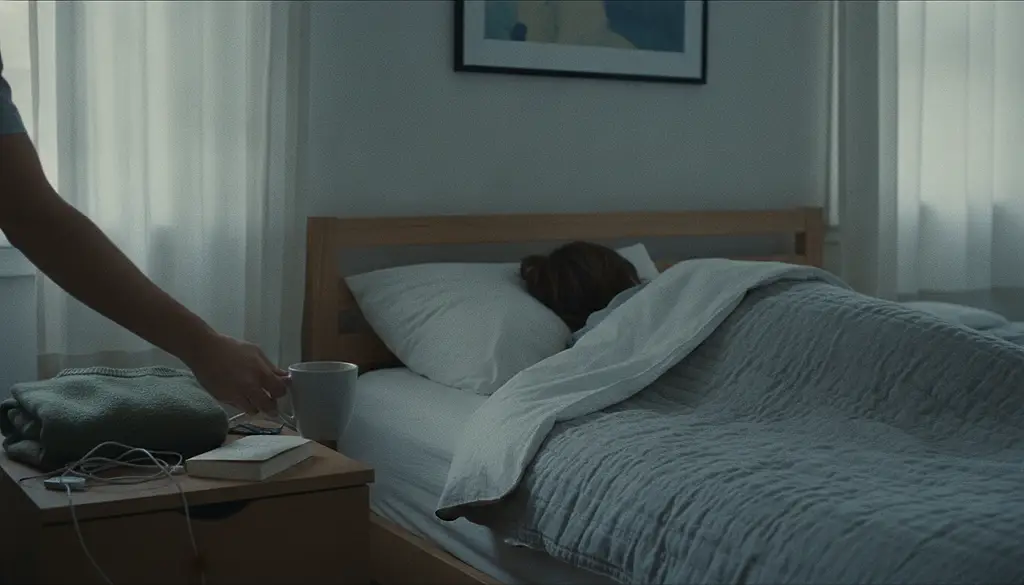
- Protect their sleep. Take the early morning so they get a lie-in. Unglamorous and disproportionately appreciated.
- Send a message during the day that is not logistics. Something you saw that they would have liked. It takes no time and it means someone was thinking about them.
Consider the first five minutes after one of you gets home. In one version, the day gets reported to the room: the traffic, the meeting, what is for dinner. In the other, the first question is about the one thing you knew was going to be difficult for them today. The five minutes cost the same. Only one of them is addressed to a person.
| What you have noticed | What fits | Why it lands |
|---|---|---|
| A hard day already sitting in their calendar | Take the evening off their hands before they ask: food sorted, nothing left to decide | It is aimed at one specific Thursday, and that is the part that registers |
| The invisible admin sitting with one of you | Finish one item on it, mention it once, then leave the subject alone | A task removed reads as attention; a task announced as a favour reads as an invoice |
| Something they mentioned in passing months ago | Arrange it, including the parts they would otherwise have had to organise | The gesture is the memory. The activity is only how it gets delivered |
| A stretch where neither of you has slept | An early morning taken so they get a lie-in, with nothing expected back | Unglamorous, immediately felt, and impossible to mistake for a performance |
| Weeks with no undivided company in them | An hour with the household off the agenda, wherever an hour is cheapest to find | Frequency is the variable here; the setting matters far less than people expect |
A short letter for the working week
That did not go through. Nothing was saved and nothing was sent. Try the address again, or write to us directly and we will add you by hand.
- What arrives
- One question worth asking your spouse this week, and the shortest honest account of when it works.
- What does not
- No rules with numbers in them, no promises about outcomes, and no third party ever gets the address.
How do you date your spouse again?
You date your spouse again by treating it as a logistics problem first and an atmosphere problem second. The reason couples stop is not that the appetite went; it is that the evening requires a date, cover for the children, an agreed activity and two people with energy left, and any of those failing cancels the whole thing. Fix the mechanics and the atmosphere sorts itself out.
Pick the date before you pick the activity. A vague agreement to go out more produces nothing; a Thursday in the calendar with the sitter already asked produces an evening. Book the practicalities in the order that things can fail, which means childcare, then time, then the plan itself.
Choose something one of you actually likes. The failure mode of a revived date night is that it aims at a generic idea of romance instead of at the two people involved. If neither of you enjoys a long dinner, the long dinner is not going to work simply because it is traditional. Ideas sorted by how much energy you have left are on date night ideas for married couples, and if the problem is what to say once you are sitting down, that is a different tool: date night questions for married couples.
Expect the early ones to feel stiff. Two people who have spent a long stretch talking about the calendar can need most of an evening before they talk about anything else, and the temptation is to read that awkwardness as evidence about the marriage. It is evidence about practice. The awkwardness goes when the date stops being an event and starts being a habit.
Frequency beats production value here too. A modest evening that recurs does more than an ambitious one that arrives once in a while, because the point is not the evening. The point is that both of you are used to being in each other’s company with nothing to organise, and that ease is a practised state rather than a mood that arrives on request.
Protect it from the household. A revived date night dies when the hour gets eaten by the things you were going to discuss anyway: the boiler, the school form, the money. Those conversations are necessary and they have their own slot; if money is the one that keeps invading, it is better handled deliberately on budgeting for couples than on a Friday evening that was supposed to be for something else.
Keep the relationship itself off the agenda at the start. An evening that opens with “so where are we at” invites assessment, and assessment invites defence. Ordinary curiosity about a person gets further than a review of the partnership, and it leaves the harder conversation with somewhere better to happen than a restaurant with the bill still coming.
What if your spouse is not romantic?
If your spouse is not romantic, separate two different things before deciding anything: whether they do not want the closeness, or whether they do not plan. These look identical from the outside and they call for opposite responses. A person who never arranges anything may still show up gladly for something arranged well, and being asked to plan is what they experience as the burden.
So test it cheaply. Offer a specific thing with a time attached — Thursday, this walk, I have sorted the rest — rather than a general observation that you are the one who makes the effort. A specific offer is answerable. A general complaint about effort is a charge, and people answer charges by defending themselves rather than by making plans.
Ask what they would enjoy rather than what they would organise. Some people’s version of being close is not an evening out at all: it is doing something side by side, or being left alone for a while and then having company. Aiming attention at a person means finding out what that person actually wants, which sometimes means dropping your own picture of what romance looks like.
- For example, one partner keeps proposing dinners out and getting a lukewarm yes. When they finally ask directly, the answer is that restaurants are exhausting after a day of talking to people, and what would actually be welcome is a Saturday morning with nothing scheduled and breakfast made. That is not a lack of romance. It was a mismatch of format.
There is also a version of this that a page cannot solve. If the distance has lasted a long while, if attempts are met with nothing at all, or if either of you feels unsafe, that is past what a page of ideas should be doing. Hand it to a qualified professional; our sources page is where the routes are. And if the underlying question is not how to get closer but whether the feeling is still there, that one is handled separately on how to fall back in love with your spouse. Checked: 2026-09.
What this page does not do
Romance advice oversells itself relentlessly. These are the limits we hold to.
- It does not promise an outcome
- Nothing here is offered as a method with a result attached. Attention aimed well makes a marriage more pleasant to live in; it is not a lever that produces a specific change in another person.
- It does not tell you what men or women want
- The gendered version of this advice is popular and useless. Preferences here are individual, and the only reliable way to find out what your spouse enjoys is to ask them.
- It does not carry a religious frame
- Much of what ranks for this search addresses the reader through faith. This page does not. No scripture, no vows-as-sermon, no duty framing.
- It does not do the bedroom register
- Closeness here means attention, time and being known. Physical intimacy is a real part of marriage and it is not what this page is written to advise on.
- It does not read a quiet month as a symptom
- A stretch with no romance in it is a fact about a stretch. We do not grade it, rank it against other marriages, or offer it back to you as a stage you have reached.
What it does stand behind
- Frequency over scale
- The clearest practical claim here: attention that repeats does more than attention that impresses. A weekend away cannot carry the rest of the year by itself.
- Aim over cost
- A gesture chosen with one specific person's preferences in mind beats a more expensive one chosen from a generic list. Aim is the variable that matters.
- Logistics before atmosphere
- Revived date nights die on childcare and calendars rather than on chemistry. Solve the mechanics first and the evening takes care of itself.